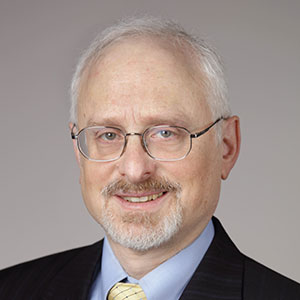
Kenneth A. Jacobson, Ph.D., John W. Daly Distinguished Scientist
Professional Experience
- Chief, Molecular Recognition Section, Laboratory of Bioorganic Chemistry, NIDDK, 1993-present
- Chief, Laboratory of Bioorganic Chemistry, NIDDK, 2008-2018
- Bantrell Fellow, Weizmann Institute of Science, Department of Organic Chemistry, 1983
- Ph.D., University of California, San Diego, 1981
- M.S., University of California, San Diego, 1978
- B.A., Reed College, 1975
Research Goal
Our overall goals are to design and chemically synthesize novel, potent, and selective ligands to probe the function of purinergic receptors (adenosine, P2Y and P2X receptors) and other critical cell-surface proteins, including other G protein-coupled receptors, ion channels, enzymes, and transporters. Our laboratory uses an interdisciplinary approach that integrates medicinal chemistry, computational modeling, and structural biology to create advanced pharmacological tools and to identify new therapeutic agents for a wide range of human diseases.
Current Research
Our work is driven by the goal of translating fundamental discoveries in molecular pharmacology into clinical candidates. By elucidating the three-dimensional structures of our protein targets—often in collaboration with leading structural biologists—we guide the rational design of new molecules with optimized efficacy and selectivity. This structure-based approach has been instrumental in our success, leading to landmark structural discoveries and multiple compounds advancing into clinical trials.
Key Research Areas & Recent Accomplishments
Our research program is organized around three major families of drug targets, with a strong focus on translating our discoveries into treatments for chronic diseases.
1. Adenosine Receptor (AR) Agonists and Antagonists
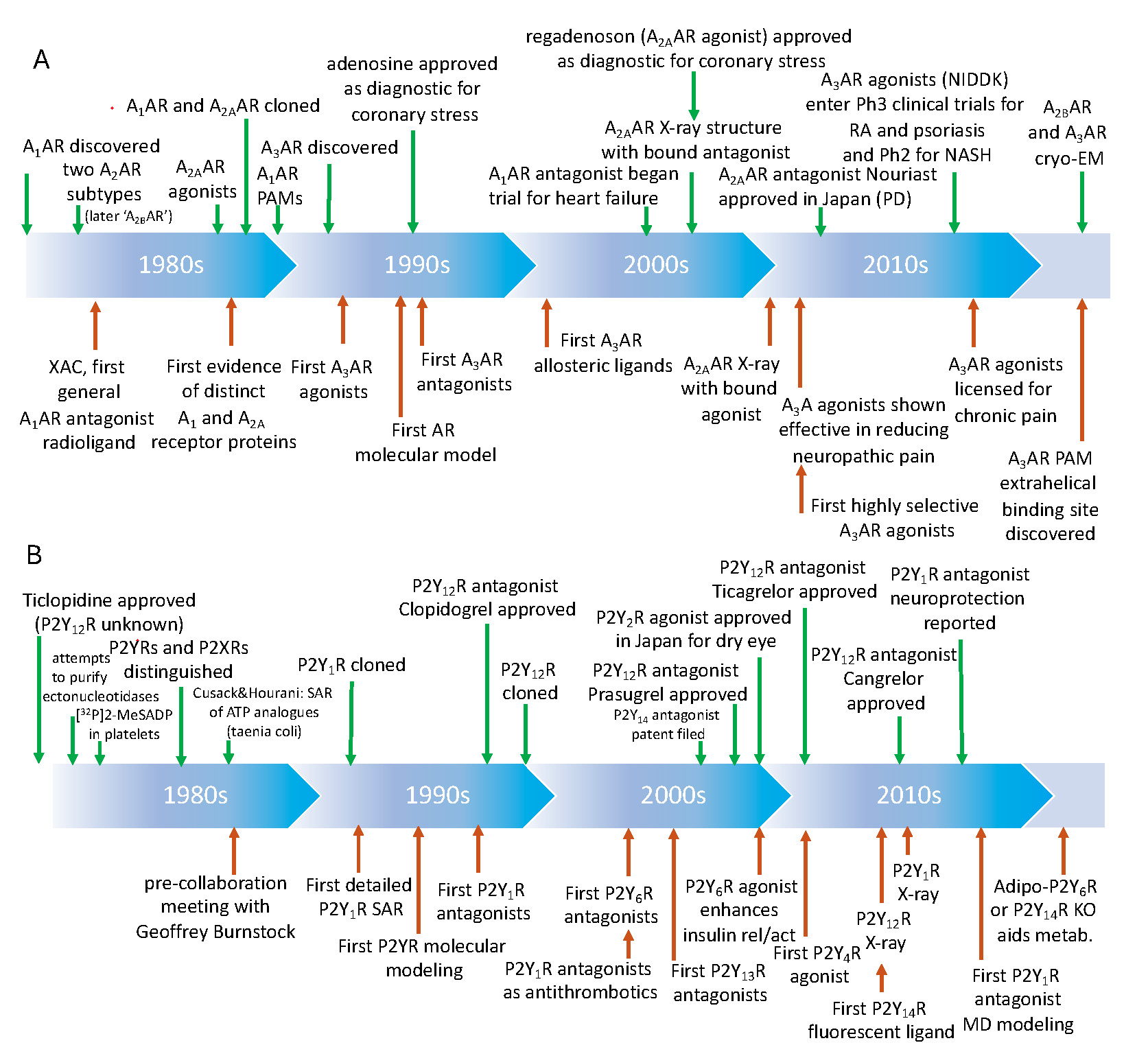
We develop subtype-selective ligands for the four adenosine receptors to treat inflammatory diseases, cancer, and neurological disorders. Our A₃AR agonists have been particularly successful, advancing from basic research to clinical application.
- Clinical Translation: Two of our A₃ adenosine receptor agonists, IB-MECA and Cl-IB-MECA, are in Phase 3 clinical trials for their anti-inflammatory and anticancer properties. A third compound, MRS4322, has entered a Phase 2 trial for treating concussion and traumatic brain injury, addressing a major unmet medical need.
- Neuropathic Pain: In collaboration with Dr. Daniela Salvemini, we developed highly selective A₃ receptor agonists that are more potent than morphine in animal models of chronic neuropathic pain, offering a potential non-opioid solution for this debilitating condition. They also reduce the side effects of morphine, making it safer and preserving its antinociceptive property over time.
- Targeted Therapies: We have engineered a novel, light-activated prodrug of an A₃ agonist that selectively reduces inflammation in psoriatic skin lesions upon irradiation, demonstrating a new paradigm for targeted therapy.
2. P2Y Receptor Ligands for Metabolic and Inflammatory Diseases
Our laboratory develops subtype-selective agonists and antagonists for the eight P2Y nucleotide receptors. This work has uncovered new therapeutic concepts for diabetes, asthma, and chronic pain.
- Metabolic Disease: We established the P2Y6 and P2Y14 receptors as critical regulators of metabolism. In preclinical models, genetic deletion or pharmacological blockade of these receptors in fat tissue protects against diet-induced obesity, liver steatosis, and insulin resistance. We are advancing potent antagonists for these targets as potential treatments for Type 2 Diabetes.
- Inflammation, Asthma and Pain: We discovered a feedback loop in which the P2Y14 receptor amplifies eosinophilic inflammation. Our potent P2Y14 R antagonists successfully inhibit this pathway in preclinical models, revealing a novel strategy for treating steroid-resistant asthma. P2Y14 R antagonists also reduce chronic neuropathic pain in model systems.
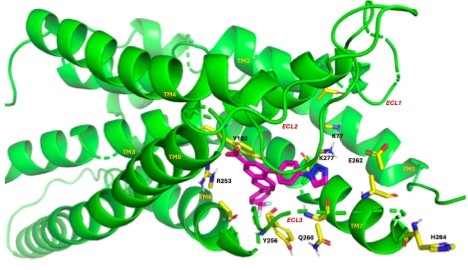
- Structural Biology: Our synthetic ligands have been critical for solving the first-ever crystal structures of the P2Y1 and P2Y12 receptors, as well as the recent cryogenic electron microscopic (cryo-EM) structure of the P2Y14 receptor, providing a blueprint to enable future drug design.
3. Modulators of Ion Channels and Transporters
We design and synthesize novel ligands for ion channels and transporters to address cardiovascular disease, stroke, and drug resistance in cancer.
- Heart Failure: In collaboration with Dr. Bruce Liang, we identified an atypical P2X4 receptor agonist, MRS2339, which improves cardiac function and increases lifespan in preclinical models of heart failure. This compound is now being licensed for clinical development.
- Stroke Neuroprotection: We developed a highly potent P2X4 receptor antagonist, MRS4719, which reduces brain inflammation and improves cognitive outcomes in a mouse model of ischemic stroke.
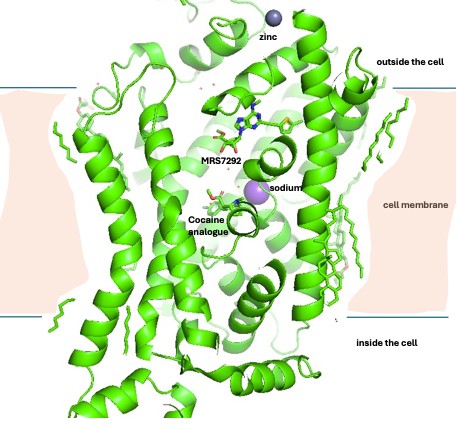
- Breakthrough in Structural Biology: We developed the first allosteric modulators of the dopamine transporter (DAT). One of our compounds, MRS7292, was instrumental in enabling our Dr. Eric Gouaux and colleagues to solve the first high-resolution cryo-EM structure of the human DAT, which can be applied to understanding stimulant addiction and designing new therapies.
Applying our Research
Our selective receptor ligands are used as pharmacological probes of the role of extracellular nucleosides and nucleotides in the brain and in peripheral tissues. More than 50 compounds from our lab are available commercially as research tools and are used to advance research in hundreds of laboratories. (PDF, <1 MB) Our own internal studies and outside collaborations include studies of the role of these receptors, and possible treatments for, thrombosis, Parkinson’s disease, inflammatory diseases, cancer, diabetes, chronic neuropathic pain, and epilepsy.
Need for Further Study
The multifaceted relationship between drug structure and biological activity requires further probing. The study of GPCRs, including purinergic receptors, provide promising avenues for the development of new drug therapy for treating chronic diseases.
Select Publications
- Structure of the human dopamine transporter and mechanisms of inhibition.
- Srivastava DK, Navratna V, Tosh DK, Chinn A, Sk MF, Tajkhorshid E, Jacobson KA, Gouaux E.
- Nature (2024 Aug) 632:672-677. Abstract/Full Text
- Bitopic A(3) Adenosine Receptor Molecular Probes: Positive Allosteric Modulation and Noncanonical Activation.
- Kurma SH, Pavan M, Wan TC, Pradhan B, López-Cano M, Ciruela F, Gao ZG, Auchampach JA, Jacobson KA.
- J Med Chem (2025 Oct 9) 68:20717-20740. Abstract/Full Text
Research in Plain Language
I am interested in a basic control system in many of the body’s cells that has relevance for the treatment of wide-ranging diseases and chronic conditions. This system is regulated by signaling molecules outside the cell that act by homing in on specific proteins on the cell surface called receptors. We mimic or block these signaling molecules with compounds synthesized in our lab to target a given receptor. When such a compound adheres to its receptor it gives a command to the cell to either initiate or suppress specific biological actions. By intervening with these pathways, we can restore balance (and health) in response to an imbalance that leads to disease.
These signaling molecules are related to adenosine and ATP (adenosine triphosphate, the “energy currency” inside the cells), which occur naturally and are released by cells. Adenosine can be produced as a breakdown product of ATP. Adenosine is present in the medium surrounding all cells in the resting state, but its concentration outside of the cell rises dramatically when stress to an organ or tissue occurs, such as insufficient oxygen and inflammation. Adenosine and ATP-like molecules, by adhering to their receptors on the cell surface, act as important modulators of the activity of every organ in the body and are relevant to a wide range of physiological processes, from the central nervous system to the immune system and the endocrine system. The adenosine receptors (ARs) are important control elements in maintaining health, often acting as a means of correcting an imbalance in the body or responding to a physiological need, such as delivering more blood to cardiac muscle in distress.
We are designing, preparing and studying new chemical compounds that bind to these receptors both as research tools and potentially as novel therapeutics. For example, activators of one of the four members of the AR family, called the A3 subtype, which were invented in our lab, appear to be effective in clinical trials for treating autoimmune inflammatory diseases (including psoriasis) and primary liver cancer.
My team uses many different tools in its work—including computer models, chemical synthetic approaches, and genetic methods to probe how molecules behave. We are also developing methodology, such as fluorescent tracer compounds, for screening molecules in the discovery of new pharmaceutical lead molecules. Moreover, we may alter a receptor genetically in a mouse line to test the mechanism of a compound that may have a therapeutic potential. Altogether, we use biology, chemistry, and computer technology to study the chemical and biological aspects of receptors. As chemists, we can synthesize new molecules of interest that are designed to have particular characteristics. We can then test these new molecules in biological systems. We often base these new molecules on compounds that are known to have an effect on multiple biological targets. Our general goal is to make these compounds more selective so that, instead of having an effect on multiple biological targets, they only have an effect on a single type of receptor or in a particular organ in the body. Sometimes the receptor can be activated in a nuanced fashion to activate only certain processes inside the cell and not others normally associated with that receptor. New compounds that produce this type of activation are also within the scope of our research program.
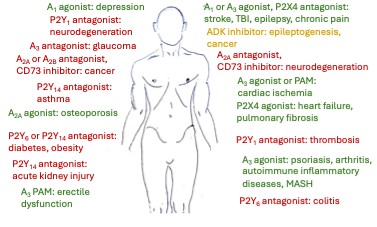
We often obtain clues about the structure of new compounds that do a specific job in the body from compounds that are already known in that context. We can improve upon the effectiveness of natural substances in a particular biological system. Other times, we discover the potential of a molecule from an unrelated class to fulfill a desired biological need, called repurposing. We then make them more selective and potent by changing the chemical structure appropriately in a systematic fashion. So, we know the effects on the activity of changing specific parts of the molecule – and this can sometimes be predicted by computer modeling. Some of our new molecules demonstrate beneficial effects in cell or animal models of disease and therefore we consider how to advance these compounds toward clinical use. Usually, we base this work on a concept that is so innovative that the pharmaceutical industry would consider it too preliminary to touch. Thus, our basic research can eventually have a practical outcome to benefit patients. This is very challenging, because of the complexity of interactions of new molecules in the body and the many ways in which lack of side effects and other safety criteria must be demonstrated before translation to humans can be contemplated. Experimental drugs my lab has developed could help in the treatment of conditions such as glaucoma, cancer, stroke, thrombosis, cardiac ischemia and diabetes, and depression, in addition to diseases mentioned above.
Research Images